On November 3, 2026, a new financial alliance went live that will eventually transform how raw ingredients are sourced, verified, and displayed on cosmetics packaging. Bank of America and the Sustainable Markets Initiative (SMI), founded by King Charles III, teamed up to launch the Lighthouse Initiative, a targeted $40 million investment strategy dedicated to scaling nature and biodiversity solutions.
Managed by the French investment firm Eurazeo, this initiative is doing something important for the beauty industry. It is taking on the expensive financial heavy lifting required to ensure raw ingredients are genuinely sustainable and traceable.
Crucially, the strategy does not intend to rely heavily on traditional carbon credit trading. Instead of focusing on offsets, it channels capital directly into physical supply chain technology. It seems the potential long-term value of the Lighthouse Initiative is that it aims to standardize tracking protocols across the technology sector.
By partnering with private equity, the SMI is not asking governments for permission or funding, since public taxpayer money and state budgets fall short of what is needed to finance global environmental goals. As King Charles famously stated during his address at the COP26 Opening Ceremony, it is necessary to “marshal the strength of the global private sector.”
For the clean, sustainable beauty movement, this announcement may be a major turning point. While the EU is currently building the Digital Product Passport (DPP) framework, the SMI’s new initiative is helping to finance the necessary high-tech environmental DNA (eDNA) software and tracing networks required to actually supply those passports with verified data.
The hope, it seems, is that this fund can help brands track the data required for supply chain traceability. If successful, it could absorb the high costs of these new technologies, making verified, sustainable sourcing a reality for the beauty industry as a whole.
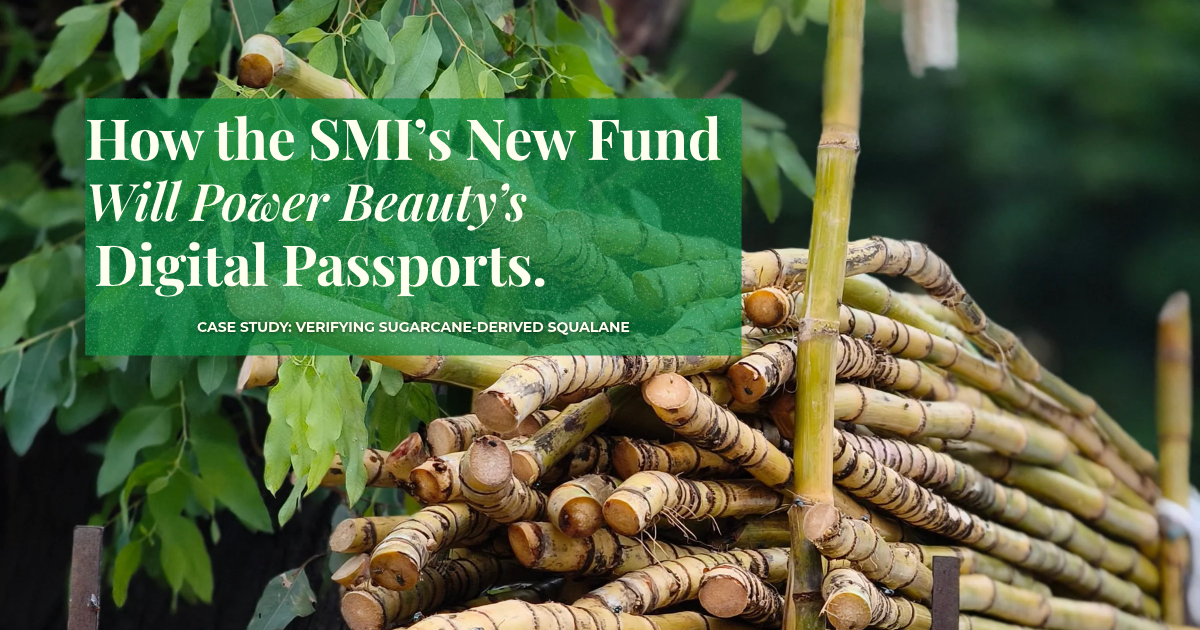
While the beauty industry is only a small part of the global sectors being funded, the benefits for cosmetics and skincare are substantial considering the raw ingredients are often dependent on large ecosystems. To illustrate, if a skincare brand sources plant-derived Squalane, eDNA can verify that the sugarcane was sustainably harvested. If this model scales as intended, raw cosmetic ingredients may eventually arrive on the market with their verified biodiversity data already attached.