On November 21, 2026, the revised EU Waste Shipment Regulation (Regulation (EU) 2024/1157) will officially take effect, instituting an EU Plastic Waste Export Ban on all non-hazardous plastic waste shipments to non-OECD countries. Historically, Europe exported over a million tonnes of mixed plastic scrap abroad annually. The impending ban halts the routing of low-grade scrap to non-OECD countries that lack the industrial recycling infrastructure to process foreign waste streams safely, resulting in plastic stockpiling and waste mismanagement. The primary destinations that have been managing Europe’s plastic waste include Türkiye, Malaysia, Indonesia, and Vietnam.
While the EU’s block on non-OECD shipments goes into effect on November 21, 2026, the UK operates under a separate post-Brexit regulatory framework. Instead of a ban, the UK utilizes a “Prior Informed Consent” system that legally permits British exporters to continue shipping plastic scrap to developing Southeast Asian markets if the receiving nations agree. According to the data tracked by the Basel Action Network, the UK exports roughly two-thirds of its collected plastic packaging waste, making it one of the largest net exporters of plastic waste globally behind Germany. While the majority of this material reportedly stays within OECD nations like Türkiye and the Netherlands, shipments routed to developing nations in Southeast Asia have seen a sharp escalation, a point of controversy.
The Environmental Loopholes
The November 21, 2026 ban only blocks shipments to non-OECD nations (like Malaysia and Indonesia). It leaves the door open for exports to the 38 OECD member states. Because Europe’s internal recycling market has been unable to absorb its own trash, policy analysts and lawmakers are concerned that millions of tonnes of dirty packaging scrap will simply be diverted to developing or lower-income OECD member nations that do not have the infrastructure to process it cleanly.
According to reports, Türkiye–a founding member of the OECD–is already the number-one dumping ground for European plastic waste. Experts warn that cutting off Southeast Asia will trigger a surge of trash directly into Turkish ports. Similarly, there may be an influx into developing OECD economies like Mexico and Chile.
Complexity of Cosmetic Waste
Unlike beverage industries that rely on easily sorted clear PET bottles, prestige and mass-market cosmetics rely on multi-material components. More complex multi-layered custom plastics, mixed resin pumps, metallized caps, and colored plastics are notoriously difficult for sorting facilities to process. These realities doom them to landfills or low-grade downcycling.
While beauty companies do not control where municipal waste flows or how global recycling is managed, a growing number of industry leaders are actively taking action to find solutions to these macro-economic and environmental issues.
Case Study: Weleda’s Holistic Approach
The primary responsibility of a clean beauty brand is not to reinvent municipal waste systems, but rather to protect the safety of what consumers put on their skin. Industry pioneers like Weleda look at packaging through a lens of total biochemical health rather than superficial marketing.
Weleda relies heavily on inert green glass packaging for high-sensitivity products like their Makeup Removing Cleansing Oil. Because the skin surrounding the eyes is highly permeable, avoid the potential of chemical leaching risks associated with PCR plastic, while the green tint naturally blocks UV light degradation.
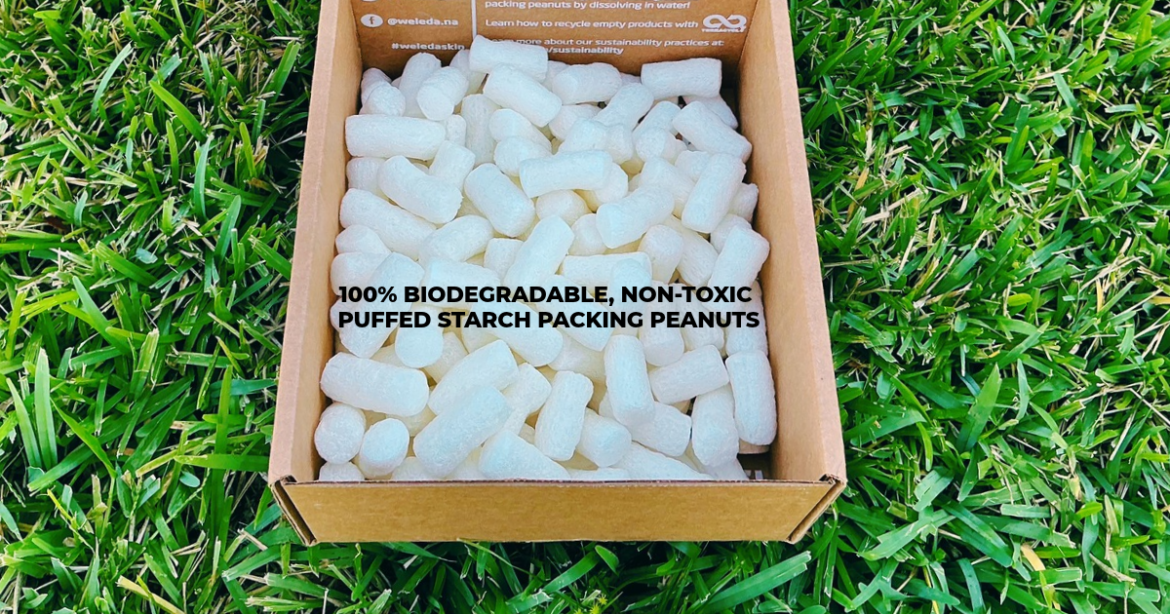
While consumers frequently wince at the sight of packing peanuts, associating them with petroleum-based Styrofoam that remains forever in landfills, Weleda utilizes packing peanuts made of completely non-toxic, 100% biodegradable, puffed plant starches, which pretty much instantly dissolve on contact with moisture.
The Macro Outlook
As international export laws tighten, the commercial landscape for cosmetic distribution will continue to face supply chain adjustments. While packaging manufacturers are developing large-scale recycling solutions, beauty brands are increasingly evaluating their material selections.